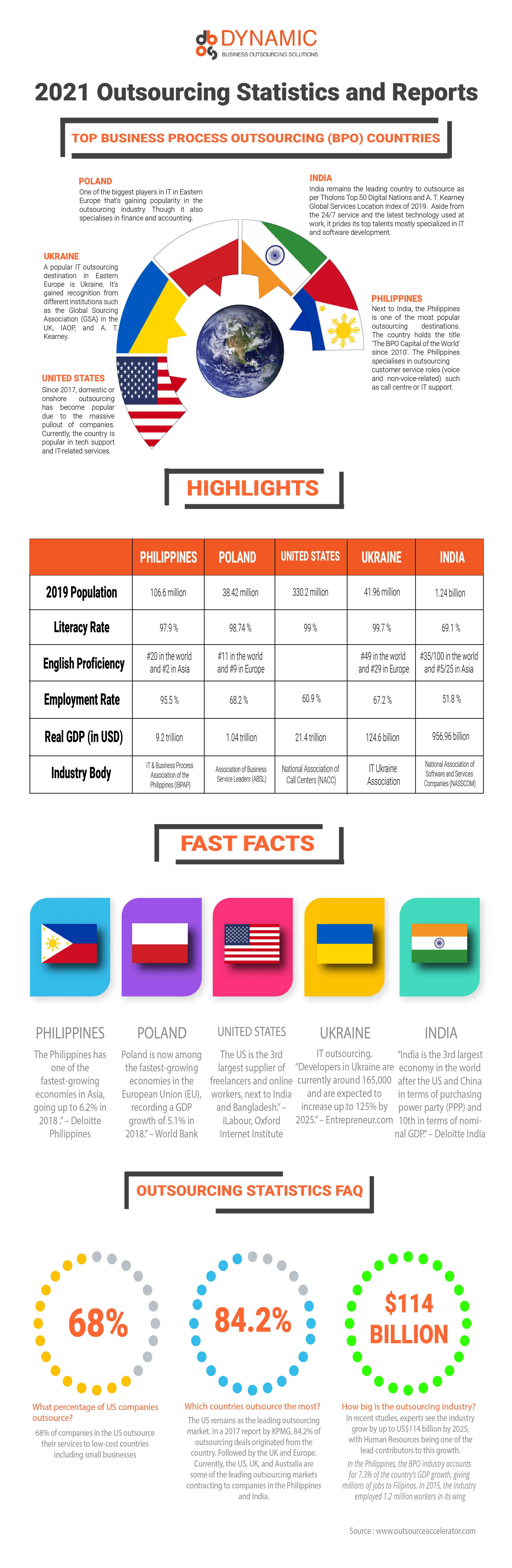

Outsourcing in the Philippines

self-care-tips

Self-Care Tips For You And Your Team During COVID-19

The COVID-19 pandemic, which has lasted for over a year by now, has changed the world of how we work ever since. Businesses around the world have suddenly adapted to the remote work culture to help slow the spread of the disease. Furthermore, thanks to the internet, working from home has come from a dream to reality.

Despite all the benefits, a limited amount of social interactions can pose mental health concerns in the long-term. Here are three practical tips on self-caring for businesses during the COVID-19 pandemic.

Tip 1: Take advantage of new applications to work more efficiently

Many large tech companies have reported gain during the pandemic due to the popularity of remote work. For example, Zoom, the American video conferencing giant, reported three quarters of earnings and revenue more than quadrupled in 2020. They have become the most favoured software in 2020 for video conferencing around the world.

Remote workers should search for applications like Zoom which will make the tedious computer work more efficient. For example, if you are required to keep track of all incomes and expenses, Intuit Quickbooks should be worth considering. Here is a list of software that every remote worker should know:

With the rise of many new applications, companies have started to outsource the administrative work to developing countries to save on labour costs, such as the Philippines.

Without paying the high-wages and benefits, the long-term savings can be substantial. Hiring a worker can cost more than $20 per hour, but outsourcing to the Philippines could cost anywhere from $3-5 due to the lower cost of living.

Therefore, if you are looking for time savings on admin, HR tasks recruitment and employee wellness and engagement, consider finding a reputable outsourcing partner in the Philippines that could customise their service base on your business needs.

 Tip 2: Stay connected with your teammates

Despite working from home, you should dedicate more than one hour a day to go social. Whether it is a co-worker or family member, text, call or video chat would be a mental boost for yourself. It also makes the person on the other side of the phone heart-warmed. One common thing to share about could be stay-at-home experiences.

For businesses, they can host fun online activities, like a weekly bingo and typing speed race to keep the team engaged, as well as creating a group chat on Skype or a Slack channel where the team can talk about any topics that have nothing to do with work. Make sure the chat owner is keeping conversations going every day. And for the clients, businesses can create Facebook or LinkedIn groups to gather customers/suppliers into one online community.

Tip 3: Develop a hobby within your interest outside your work

Find a hobby that is outside your businesses or usual interests. It will help rest your mind in the non-working hours and reduce stress. If the activity can be shared online it would be more beneficial. For example, practice yoga at home in the morning and start live streaming. Share on social media and invite friends and family to join.

Other hobbies can be creating an online movie, TV or book club and sharing with your co-workers. Or you may start a home garden and keep a note of the progress.

It is more essential for remote workers to have a clear boundary between work and rest. 

Conclusion: Take good care of yourself and your teammates

COVID has imposed challenges due to the limited amount of social interaction and staying at home. With remote work become the new norm, businesses should think of ways to keep their team healthy and happy. Finding ways to work more efficiently, stay connected with co-workers and develop new hobbies are crucial tips to consider.

b2b-companies

DBOS Receives Award for Being One of the Top B2B Companies in Asia for 2020

The current state of voice is becoming more and more widespread as technology gets smarter. This year, we’re seeing more customer data analysis, real-time translation, and enterprise voice assistants.

Here at Dynamic Business Outsourcing Solutions, we’re always on top of the latest trends and practices so you don’t have to be. You can rest easy knowing we’re providing the latest and greatest for you. We’ve been at this for a while now, and our team has been providing world-class, personalized and affordable outsourcing services to businesses of all shapes and sizes.

Our greatest product is our staff. We offer different offshore staffing services such as call centre support, back-office functions, online marketing services, graphic designing, website, software and app development.

We can even customize solutions to each individual client’s request and requirements. With this, we cater to different industries such as car finance, car rental, insurance, marketing, IT, development, and a whole lot more. We locate experienced college graduates with the perfect skills to fit our client’s requirements for whatever industry it may be.

Over the years, we’ve had many successful engagements that have brought positive results to our clients.

client-review

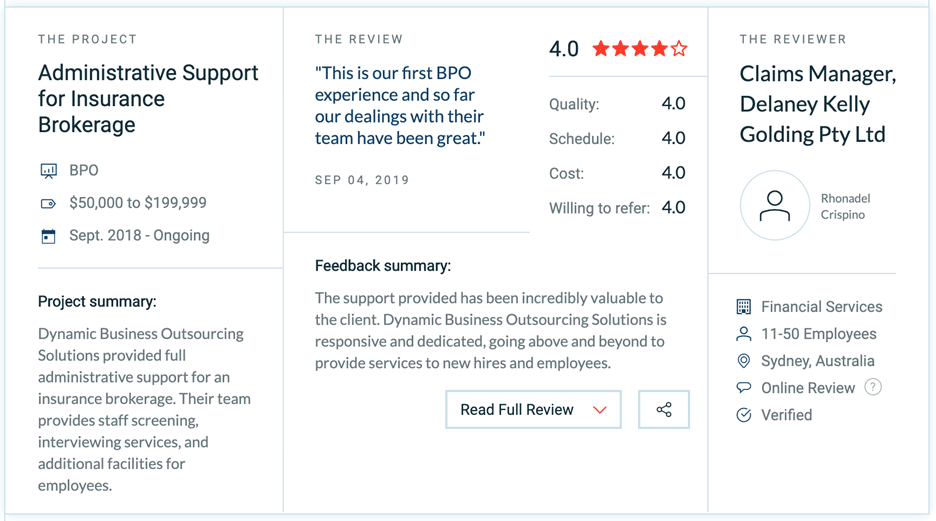
“Our dealings with their team have been great.” – Claims Manager, Delaney Kelly Golding Pty Ltd

Feedback such as this highlights our great customer service and the top quality of our deliverables. That’s why we’ve been recognized as a 2020 top collections service provider in the Philippines by Clutch. This award means we’re a top voice services company!

Jacqui Miller, our CEO and founder, had this to say about the achievement, “We aim to bring our customized outsourcing solutions to more SMEs not just in Australia and New Zealand but also in North America and Europe. Also, we want to provide more jobs and opportunities to well-rounded and talented Filipinos by opening more offices in key cities in the Philippines.”

We’re looking forward to what the future holds and always want to hear from you!

companies

Covid-19 is pushing more companies to look at outsourcing

Over the decades as globalisation has taken hold, the Philippines has become a major player in the outsourcing industry. In cities from Makati to Quezon City, more than 1.2 million people staff are employed by BPO companies, call centres, IT centres and all kinds of other outsourcing services to western businesses, including Australia and New Zealand. 

But the uncontrolled nature of the country’s coronavirus lockdown declared at four hours’ notice in March, left many outsourcers clambering to avoid operation interruptions as they shifted to remote working. This highlighted the risks of focusing on outsourced operations and work that has been kept in- house but transferred offshore in a singular place. 

The Philippines which is one of Asia’s biggest outsourcing and offshoring hub and one of the worlds top five is one of the outsourcing hotspots hoping to benefit.

For those businesses that were not considered outsourcing before, the pandemic will expedite it. They will look at the circumstance and say if we are global operating companies, we too have to have our workforce allocated more evenly. 

One hurdle for Philippines outsourcers in the switch to remote work or work-from-home was stern privacy rules on what can be taken out of the office. Next was the inadequacy of infrastructure, power interruptions, and staff often lack stable internet connections at home.

Many companies were not anticipating the scale of the impact. Most staff don’t have fast home broadband because it is too expensive so BPO companies have had to provide their staff with a prepaid sim card (with internet cash stipend) and laptops so they can work remotely. Some even let the staff take home their office desktop computers.

Since we transitioned our staff in DBOS to work from home, productivity continues to be higher. We have tools to track the productivity of every employee right now. There is a lockdown, so obviously, everybody is focused on work. We have to recognise how a grand-scale work from home stacks up in a non-lockdown environment. The second viewpoint is a lot of clients have comfortably accepted it because of the pandemic. 

The Philippines remain one of the most competitive and affordable in terms of labour costs among the top outsourcing providers. It continues to attract western companies, including Australian and New Zealand companies. As much of the country continues to be under “enhanced community quarantine”, the country’s BPO industry has adapted to new working practices and shifts in demand. With this, BPO companies executives hope that the way the industry handled the shift to work-from-home setup during the pandemic will be another factor in their favour.

Related article: A Quick Guide to Opening Your Business After the COVID-19 Lockdown is Over


outsourcing-center

Outsourcing Is More Relevant Than Ever After COVID-19

COVID-19 has hugely affected the outsourcing industry and there is no quick recovery in sight. However, once the recovery begins, the bounce-back will be racing, and the outsourcing industry will be more relevant and attractive than ever, especially to small and medium business owners. Here’s why:

The main challenges for the outsourcing industry

Around the world, outsourcing service providers are dealing with travel restrictions resulting in empty offices. Many companies in developing countries such as the Philippines provide outsourcing services to businesses in Australia and New Zealand. But, they do not have the infrastructures or management tools to execute a work-from-home (WFH) system for their staff. They are having great challenges in trying to deliver work.

With work and projects not getting done, many outsourcing partners have to take the work back in-house, which may result in them stopping outsourcing altogether. Even when the COVID-19 crisis is over, companies who can deliver will also have to deal with projects on a halt and limitation of incoming projects.  

Good news ahead for outsourcing providers

Australian companies are also experiencing the hurdles of staff working from home. They have to deal with processes they wished they had automated before all this happens and most of their staff had to work from home. These situations will be the deciding factor for many companies to open up towards automation and digitisation and of their work processes. This will reduce the threshold for outsourcing in the future. Companies may be more likely to outsource their business processes to other countries in the long run. There are understandings among companies from all over the world about this crisis that affects us all. 

Companies from all around the world have a great understanding of this crisis that affects us all. They have become more flexible when deadlines are not met and schedules have to be changed. The best advice is to maintain clear communication with your outsourcing partners. Transparency is key. You have to ensure that your clients see that you are doing the best you can to deliver optimum results despite the circumstances. 

Road to recovery

The fastest recovery is expected in strong European countries, especially countries in North- and Western Europe. But two economic powerhouses in the pacific, Australia and New Zealand are also expected to bounce back just as quickly. 

According to abc.net.au, Australia is unlikely to experience ‘post-war’ recovery after coronavirus. Their battle to contain the onslaught of the pandemic is working well and the economy is responding to the recent stimulus. Travel and entertainment industries may have suffered immensely but sectors like online retail, food delivery and subscription services are booming. These sectors have skyrocketed more than 60 per cent. Same with the demand for home improvement products which has soared 64 per cent. 

The biggest challenge for companies would be staying in business until the initial stage of the crisis is over. Once it is, the demand for outsourcing service will be bigger than ever. Most especially for industries like digital working environments, cloud services and security.  

How to stay informed on the situation?

There are many resources online that will help you stay informed on the situation in the outsourcing sector.

small business owner

When and How to Outsource for your Small Business

Most entrepreneurs and small business owners have enormous talents but oftentimes they think they can do it all. This mindset can really hinder the growth of the business. Through outsourcing, they will have more time to focus on their core competencies to generate income. 

Business owners and entrepreneurs have long seen outsourcing as a strategy used by big businesses or large corporations, but technology has made this incredible resource more accessible to startups and other small businesses. For many startups, outsourcing has made a powerful impact not only on their growth but also on their efficiency, productivity and bottom lines. 

More and more businesses in the SME category are outsourcing or utilising offshore teams to do repetitive day-to-day back-office tasks because of technology. The advancing technology allowed professionals to be able to work from anywhere in the world. Couple that with the availability of extremely qualified and talented professionals. Whether it’s a virtual executive assistant, digital marketing professional, graphic designer, bookkeeper or web developer, there’s a large pool of these talents in countries like the Philippines. The utilisation of offshore staffing helps small businesses save on overhead costs. It removed the burden of paying overhead associated with payroll taxes and expenses such as health insurance and salary, as well as the office space constrictions that growing a company in-house can present.

When to outsource

Taking the first steps toward outsourcing can be a daunting task and extremely time-consuming. But figuring out how to build a more sustainable business with help from outside professionals can offer increased productivity, efficiency and economies of scale.  According to David Walsh, an entrepreneur and author of Source Control, “Progressive entrepreneurs realise the unstoppable power of outsourcing to handle aspects of their business that are essential but simply don’t make sense for them to deal with personally.”

The right time to outsource is different for every company. Some businesses have in-house employees to handle daily activities but may need outside help to tackle new projects that are beyond their capabilities and capacities. It’s when you and your current staff are unable to manage the daily business of your company and do it satisfactorily, it may be the right time to consider outsourcing. For entrepreneurs, the realisation may come when you had no time left in your day to pursue the growth of your business. If you want your business to thrive, you have to let go of some control and start delegating. 

According to Tonya Thomas, president of The Small Office Assistant, it’s recommended that startups and very small businesses start outsourcing from the very beginning. She suggested starting out with a virtual assistant and a bookkeeper and growing the team from there. 

What to outsource

Almost any task can be outsourced these days with many outsourcing and offshore staffing firms in countries like the Philippines offering access to a large pool of talented and qualified English-speaking professionals. But just because you can outsource a task or a project doesn’t mean you should. 

Business owners should take a hard look at their business and determine their strengths and values. Startups and small businesses especially must identify their core competencies and capabilities. 

Here are two general categories of the types of tasks that are best outsourced: 

  • Highly repetitive tasks. Some examples are data-entry, accounts payable, website tasks such as moderating comments, blog writing, content creation, SEO and social media tasks.
  • Specialised knowledge. An example is IT support for your network or accounting system. 

Related: Here are 4 tasks that entrepreneurs should consider outsourcing.

Finding the Right Outsourcing Provider

Although technology makes it a lot easier to find capable, reliable outsource providers, the selection process is still extremely important. There’s no better place to start than your own network; ask other entrepreneurs or your accountant, lawyer, or banker if they can recommend a provider that offers the services you need. Online networks like LinkedIn and Facebook make it easy to grow your personal networks and to ask for recommendations.

Others are also able to locate outsource providers through brokers like Outsource Accelerator. They are the leading Business Process Outsourcing (BPO) marketplace, advisory & operator for businesses across the globe. They connect startups, entrepreneurs and business owners of small-to-medium sized companies with the top outsourcing providers in the Philippines while helping them learn about, engage and integrate outsourcing into their businesses.

Whether you use a personal referral, a web-based broker or marketplace, or a consultant, the key to choosing the right provider is to know exactly what you’re business needs are.

Focusing on identifying your performance metrics for each task that you want to outsource is critical. There are some outsourcing providers that focus on speed at the expense of quality or vice versa. This is fine as long as there is a good match between what the small business wants and what the provider specialises in. In the Philippines, there are BPOs that specialise in customer service support for big companies like Slack, Google, AT&T, Skype to name a few who require a larger call centre operation. Others specialise in assisting the SME market like Dynamic Business Outsourcing Solutions (DBOS). DBOS’ business model allows full flexibility to scale up and down from 1 staff to 50+ which is perfect for startups and expanding businesses. Many small businesses don’t realise these massive differences among outsourcing providers and select the wrong ones. It’s essential to have an open and transparent conversation with potential partners regarding these key performance metrics.

Making it Work for your Small Business

Your work does not end yet once you’ve found a provider. You need to put in some extra time creating a specific contract that outlines exactly all the key performance indicators. You need to ensure that your provider focuses on what is most important to you rather than their own preferences or assumptions of what you want. 

Set your expectations and the steps included in the job as clearly as possible. Never assume that your provider is thinking what you’re thinking. And even when you clearly set your expectations, there will always be a learning curve on the provider’s side so just be patient. The provider will get better, and you will soon have the freedom to focus on more important tasks. 

Finally, your last responsibility to become a successful outsourcer is to relinquish some control and allow your new offshore team to do the job you’ve hired them to do. A measure of trust is required to be successful at outsourcing. Remember that the whole point of outsourcing is to save your valuable management time and attention. You also have to realise that removing yourself from low-level operations is the smartest investment you can make for the long-term success of your business.

Determining the Costs vs. the Benefits

The costs of allowing you to get away from the day-to-day tasks and build a better business depend on the type of work that you’re buying. You also have to consider the skill level of the employees you’re planning to hire and the location of your provider.

In the Philippines, outsourcing companies like DBOS offer a flat structure monthly fee which covers all the dedicated staffing solutions:

  • Staff’s salary package
  • Staff’s workstation
  • Electricity and internet access
  • HR support
  • IT support
  • Admin support
  • Orientation
  • Payroll processing
  • Benefits management
  • Performance monitoring and evaluation
  • Engagement and recognition programs
  • Meeting and boardroom access
  • Access to pantry and supplies

This type of fee structure allows businesses to save between $20,000 to $40,000 per employee annually. 

It cannot be any more true that you get what you pay for wherever you go in the world. Regardless of location, you always have to pay someone what they are worth. Leveraging the currency differences though can often work in your favour. 

Overcoming the Challenges

Outsourcing does not guarantee success every time. While it yields great advantages for a startup or small business, there are always challenges. 

  • Language and timezone barriers. Making sure that your own communication is clear can help overcome confusion for non-native English speakers. Time zones, on the other hand, create more opportunity than an inconvenience. You can extend your productive hours by assigning tasks over to your offshore team during your workday and wake up to find it complete and ready for you.
  • Security risks. There is always some level of security risks involved when handing over tasks to an outsourced provider. You need to ensure that you’re not risking any employee personal information and customer data. Choose a provider that allows clients to maintain their intellectual property and full process and data control. Or provide them with only the absolute minimum data necessary for them to do the job. Otherwise, for general sense, always review your provider’s security policy and practices.

Earning the Benefits of Small Business Outsourcing

Despite the risks, outsourcing offers small business owners great advantages. It’s an affordable and proven strategy for growing your business without letting it consume all your time. Outsourcing can bring back your focus on your core competencies and allows you to spend your time setting new goals and finding ways to fulfil them.