Employee Performance

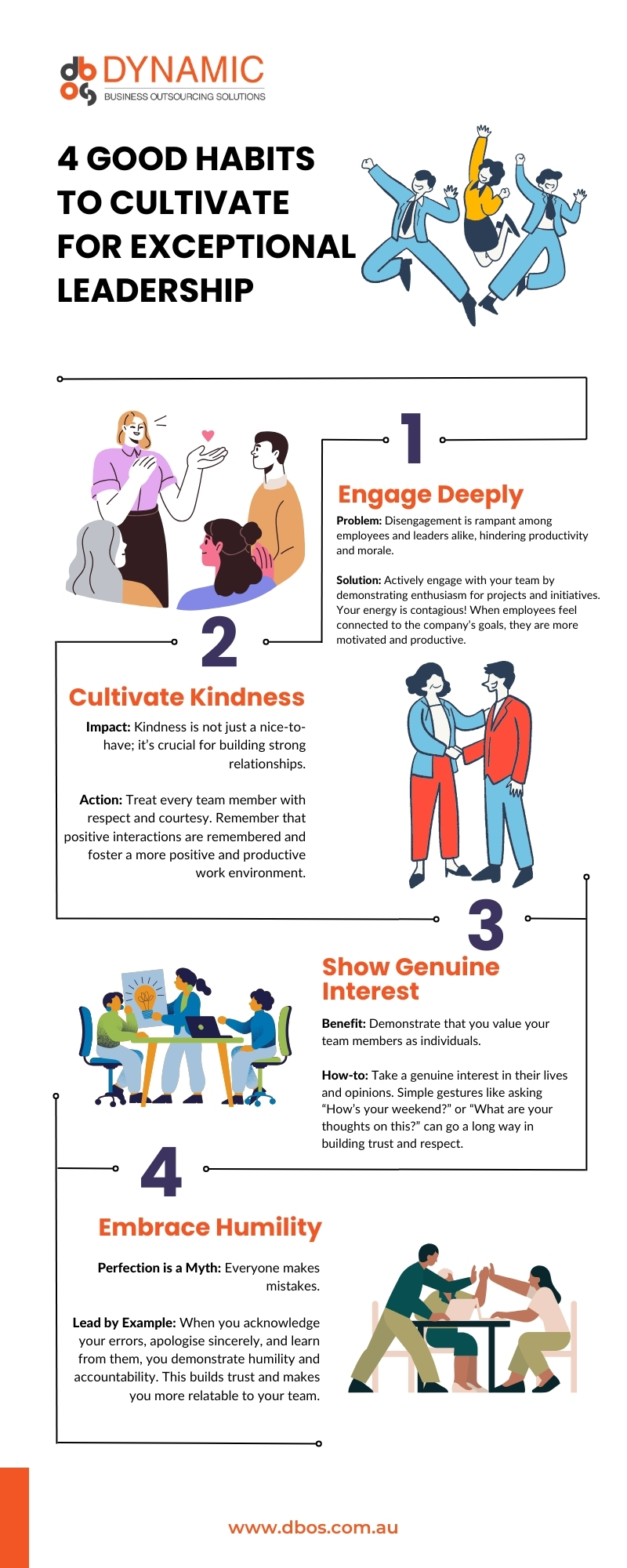
4 Good Habits to Cultivate for Exceptional Leadership

Becoming a better leader isn’t about overnight transformations; it’s about consistent effort and cultivating positive habits. This journey offers numerous rewards, including increased employee retention, improved business outcomes, and reduced stress.


4 Good Habits to Cultivate for Exceptional Leadership - DBOS

Related Article: Why Leaders Need to Embrace Employee Motivation

Conclusion:

By consistently practising these 4 habits, you can significantly enhance your leadership skills. The benefits extend beyond improved employee morale; you’ll also experience increased productivity, stronger relationships, and greater success for your organisation.

5 Tips On Conducting An Effective and Meaningful Performance Review

Giving a performance review has never been simple. Now that remote staffing has become a more popular option for employers, the process of conducting performance reviews has become even more complicated. So, if you’re engaged with a remote staffing company, we’ll help you figure out how to give an effective performance review. 

Let your staff know the end goal of the review. 

The first step is to ensure that your staff understands the purpose of the performance review. Remote workers are, by definition, not in close proximity to their managers or other co-workers. This can lead to a feeling of isolation and disconnection from the company’s mission. Make sure that your remote staff knows that their performance reviews are an opportunity for you to connect with them and help them understand how their work is impacting the company’s bottom line. 

Turn the camera on. 

In order to effectively connect with your remote staff, you need to be able to see their face. This may seem like a no-brainer, but it’s easy to get caught up in the day-to-day and forget to turn on the camera during a performance review. Seeing your staff’s facial expressions will help you understand how they’re feeling about their work and the company. It will also help you build trust and rapport with them. 

Be clear and concise in your feedback. 

It’s important to be as clear and concise as possible when giving feedback during a performance review. Remote workers may not have the opportunity to ask questions or seek clarification in person, so it’s important that they understand your feedback the first time. If you’re unsure about how to deliver feedback, consider using a rating system or providing specific examples of what the employee did well or could improve upon. 

Don’t forget to praise good performance. 

In addition to offering constructive criticism, it’s also important to take the time to praise your employees for a job well done. Remote workers may not receive the same level of recognition as their in-office counterparts, so it’s important to make sure that they feel appreciated. A simple “thank you” can go a long way towards making your remote staff feel valued. 

Follow up after the review. 

The performance review doesn’t end when you finish giving feedback. Be sure to follow up with your remote employees after the review to see how they’re doing and if they have any questions. This is a good opportunity to provide additional support or resources they may need to improve their performance in the future. 

Related Article: 5 Tips To Help Improve Employee Performance Reviews

Final Thoughts: 5 Tips on Conducting an Effective and Meaningful Performance Review for Remote Staff 

Because of the nature of remote work, offshore staff are often the most disconnected from the rest of the team. Performance reviews are an opportunity to help bridge that disconnects by providing feedback, praise, and support. So, it’s important to know how to conduct performance reviews that are both effective and meaningful. By following the tips above, you can be sure that your performance review will help your remote staff feel appreciated and supported, while also providing valuable feedback that can help them improve their work in the future. Remote work is here to stay, so start perfecting your performance review process today! 

employee performance reviews

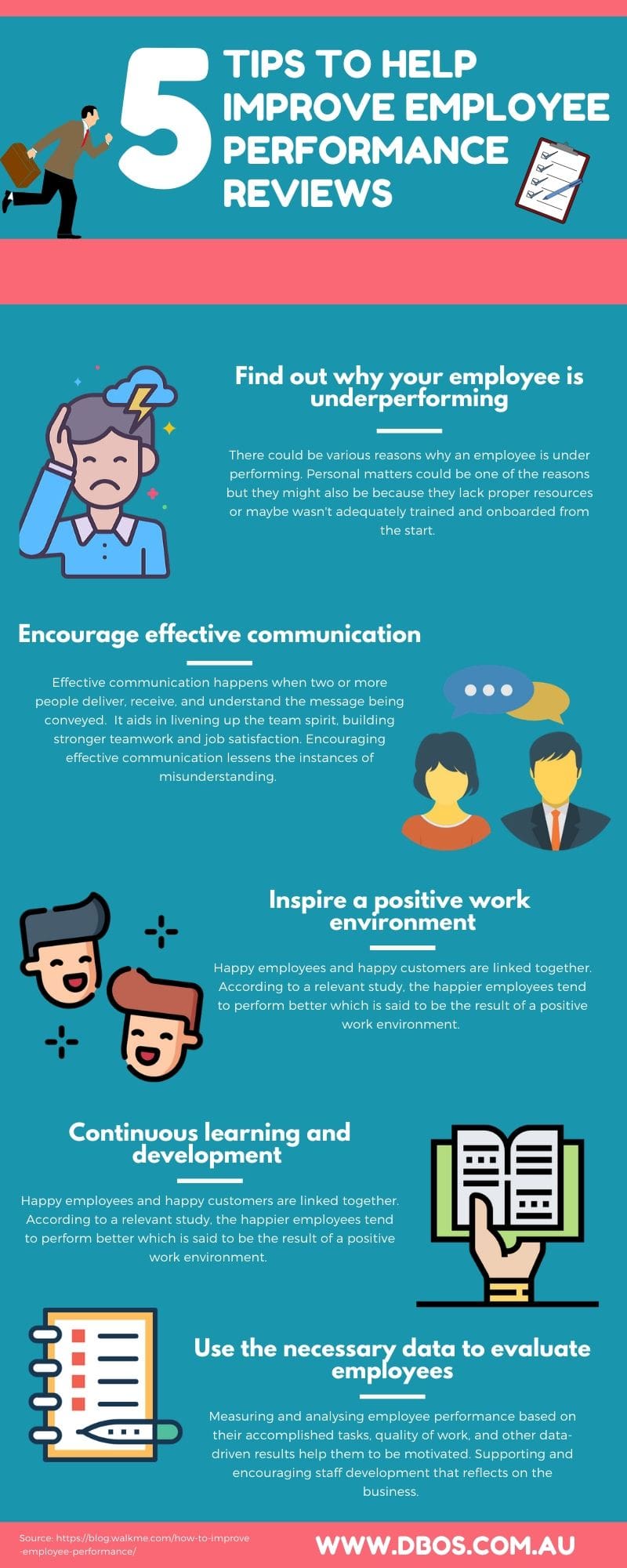
5 Tips to Help Improve Employee Performance Reviews

Employee performance reviews are a vital part of helping the staff create a clearer goal for themselves which also serves as motivation to do better. While it is done differently from every organisation, the goal of boosting employee performance remains as the main priority.

Meanwhile, more than just informing the staff of their level of productivity, employee performance reviews are also a good way to build rapport and loyalty within the organisation. Not only it is good for the company, but also for the individuals concerned.

Now, every employee contributes to the success or failure of a business. That is why improving the efficiency of the workforce and boosting the quality of services that they provide is necessary.

So, whether you’re a manager or a regular staff, it is highly important to keep track of your performance. Knowing your strengths and weaknesses earlier is better so you can do something to focus on your strengths. And to  further help improve every employee performance review, read these tips:

employee performance reviews


1. Find out why an employee is underperforming

Merely knowing and thoroughly understanding the employee’s issues are extremely different. So gathering proper information and enough data as to why they are underperforming would be the best foot forward. And instead of making numerous assumptions, it is better to exert any effort in finding out why. This way, it would be best tackled and addressed accordingly with the people involved.

2. Encourage effective communication

Effective communication happens when two or more people deliver, receive, and understand the message being conveyed successfully. It holds an integral part in creating a clear and concise discourse between people. At work, it aids in livening up the team spirit, building stronger teamwork and job satisfaction.

On the other hand, effective communication gives way to clearly deliver employee performance reviews and lessen the instances of misunderstanding. Also, the team members should be encouraged to communicate their ideas, as well as their deadlines, progress, and things that they believe is affecting their performance.

3. Inspire a positive work environment

Relevant studies prove that happy employees and happy customers are linked together. Happier employees tend to perform better which is said to be the result of a positive work environment. On a bigger scale, the employee’s happiness does not come from being paid a huge amount, nor getting tons of incentives. It is more of the feeling that they are valued for their role, appreciated, trusted, and encouraged to do more. And that is entirely for the HR people to handle.

However, there is only a significantly small number of companies all over the world that highly prioritises employee well-being. Unlike in the Philippines, an impressive number of HR-focused outsourcing companies have been established that gives high regards to the overall employee welfare.

4. Continuous learning and development

Just like how an employee was given a lot of attention during onboarding, they should be continuously provided with ongoing training. This way, the employees would highly feel that the company is very much concerned about developing their skills to further improve their performances too.

5. Use the necessary data to evaluate employees

Measuring and analysing employee performance based on their accomplished tasks, quality of work, and other data-driven results help them to be motivated. Concrete data that shows their strength and weaknesses both empower the employees. It gives them a higher level of motivation and conviction in improving their performance. So supporting and encouraging staff development will, later on, reflect on the business.

Conclusion

Employee performance reviews have provided better results than most ways that the HR people have used before. For example, rather than subjectively calling out an employee and telling them a piece of your mind regarding their performance, showing them the data is more credible.

Now, cultivating a healthy environment and promoting open communication gives the employees more room to work towards the company shared goals. And definitely, it is a good way for them to grow and succeed individually.

So if you want a professional’s viewpoint on how to help your employees further improve their performance and create high performing, productive workplaces, there is an excellent free culture IQ assessment tool which provides an in-depth, personalised report covering your areas of strength, opportunities for improvement and recommendations tailored for you to build a productive and enjoyable business.


manager

7 Steps How the Perfect Manager Delegate Tasks

A manager wears many hats. They are most known to handle all the planning, organising, leading, controlling, and execution of everything in their scope of work. Their role is very crucial to any kind of organisation and at most times, success relies on their hands.

Now, not many people acknowledge the importance of having good managers. As long as they can produce the output, the process doesn’t matter. Google also tried to prove something similar when they launched Project Oxygen in 2008. The goal is to also prove that managers don’t really have an impact on performance. However, after collecting all the data, they have come to a complete opposite of what they want to achieve – that good management can actually make a huge difference.

To achieve good management, a good manager is needed. But, you should remember that great employees don’t always make the best managers. Most great employees tend to want to focus only on their work and nothing else. They might have great technical skills, but it doesn’t mean that they’d make a great manager. On the other hand, a perfect manager is fully equipped with leadership skills that not every employee has.

Being a good manager is not as easy as it sounds because it requires numerous criteria. Specifically when managing an offshore team from all walks of life is a definite challenge.

perfect manager

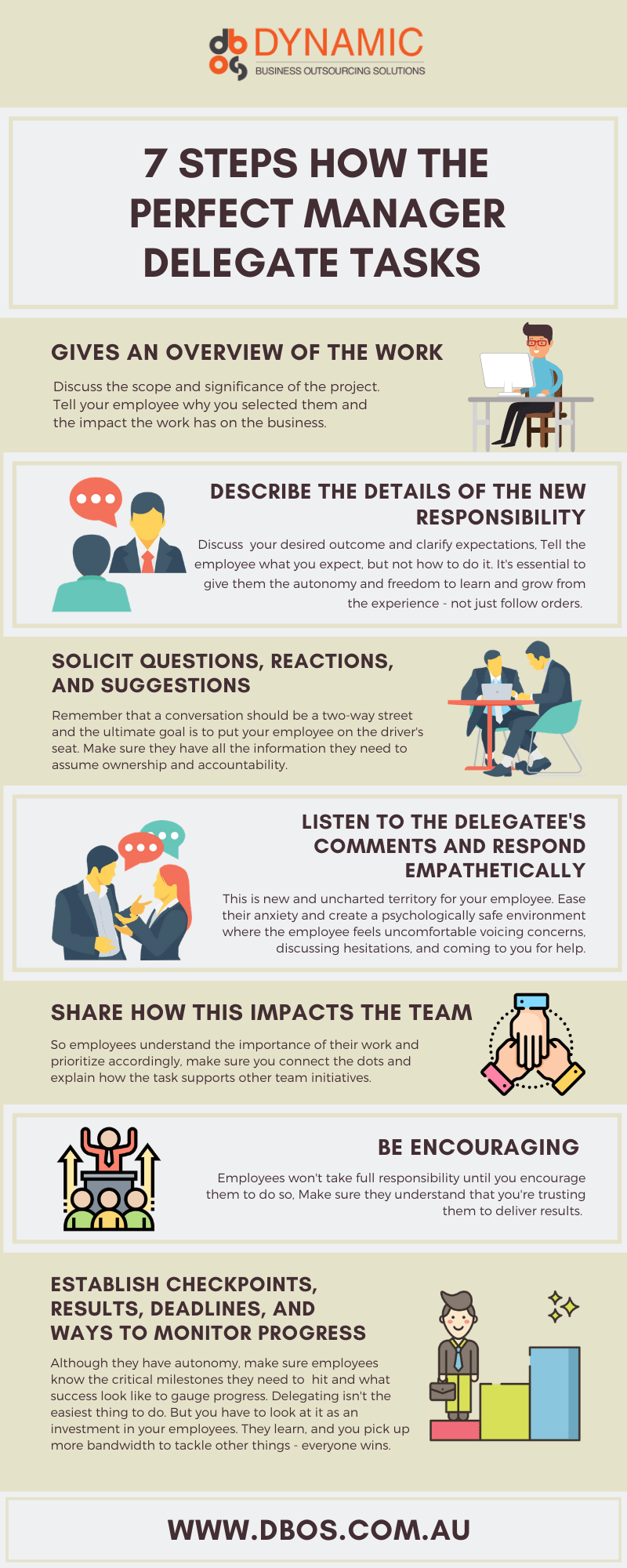
One of the best traits of perfect managers is their ability to delegate tasks properly. Here are 7 steps on how they do it.

1. Gives an overview of the work

It should be a prerogative to let the employee know why they were chosen for a specific task or work. Give them an overview of their supposed task and tell them the impact it has on the business.

2. Describe the details of the new responsibility

Talk to the employee to discuss your desired outcome and clarify expectations. Tell them what you expect as the project progress. Also, give them the autonomy and freedom to learn from that experience.

3. Solicit questions, reactions, and suggestions

Never forget that effective communication is a two-way street. Let them ask all the questions that they have and answer them as much as you can. You can also ask for their honest suggestions and reactions to make the process better. And make sure that they have all the information that they need before hitting the road.

4. Listen to the delegatee’s  comments and respond empathetically

As the manager, your people should feel safe and unjudged while voicing their concerns with you. Help them ease their anxiety by empathetically responding to their worries and regularly coming to you for help.

5. Share how this impacts the team

Brief your people on how each of their roles impacts the other members of the team. Teach them how to prioritise accordingly and make them understand the importance of their work.

6. Be encouraging

There is no better motivation for an employee but the encouragement of their boss. Make sure they understand that you’re trusting them to deliver results.

7. Establish checkpoints, results, deadlines, and ways to monitor progress

Although your people have the autonomy, make sure that they also know the targets and deadlines to hit. As the manager, it is on you to establish checkpoints and other ways to monitor your people’s progress.

Conclusion

A perfect manager knows the right ways on how to delegate tasks according to each person’s capability. Moreover, they help their people showcase the best of their abilities.

Meet some of these perfect managers in DBOS! As an Australian-owned offshore staffing company based in the Philippines, we aim to build high-quality output that benefits both the employee, client and the company. After establishing the head office in Araneta Center, Cubao 4 years ago, the company is now ready to expand the business and open another door in Eastwood City.

Anticipate the opening of our new office and help reduce your wages by up to 70% if you partner with us! Enquire now and get a free consultation with our very own CEO/Founder!

high-performing team

8 Key Characteristics of a High-Performing Team

A high-performing team is unlike any regular team. It is comprised of highly talented and motivated individuals with common goals. Such team helps their company achieve excellence and growth.

However, each person has a different set of principles and beliefs which could probably taint the team harmony. While it is true, thorough planning and execution of business strategies would help overlook the differences.

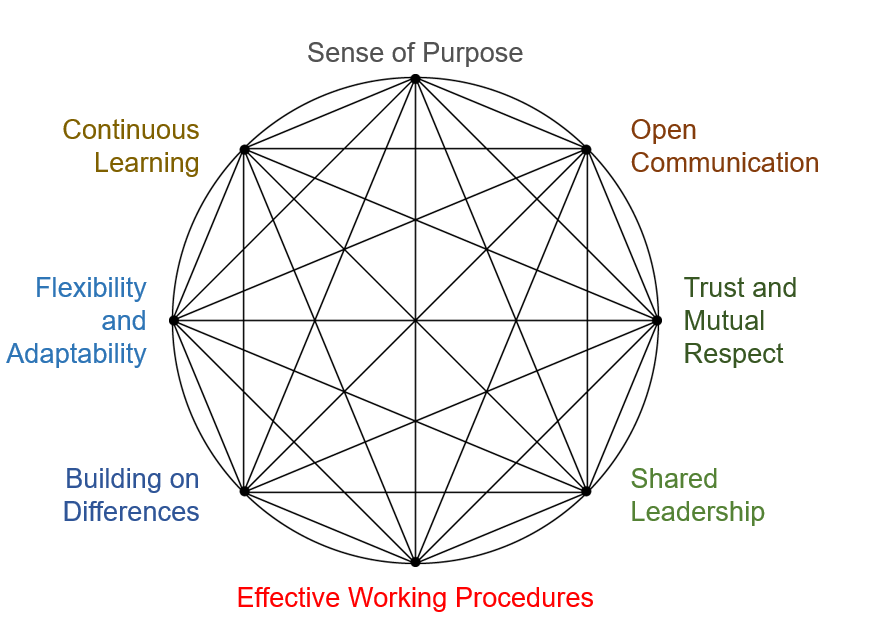
According to Dr Tim Baker, there are at least 8 characteristics of high-performing leadership and team development.

Here is the model of a high-performing team:

high-performing team

Sense of Purpose

Individuals with a sense of purpose have clearly defined their mission and goals since the beginning. These people have set their eyes on the priorities and are driven with a strong focus on results and solution.

Open Communication

One of the most important characteristics of a high-performing team is open communication. Members who are not afraid to express their ideas and thoughts, as well as listen to what others have to say, are indeed professionals.

Trust and Mutual Respect

Respect and trust are two words that correlate with each other. In a professional setting, a leader and its followers do exist. As part of a team, both should learn how to trust and respect each other.

Shared Leadership

An effective leader asks for ideas and suggestions from their members. They value their team’s insights and are not autocratic. This kind of leaders understands the key role of their members.

Effective Working Procedures

Aside from being highly skilled, effective team leaders are also resourceful. They don’t stop at “good” but rather aim for the “best”, every chance they get. They encourage creativity and find the most outstanding way to achieve their goal.

Building on Differences

Efficient leaders don’t look at differences as drawbacks of an individual. Instead, they use it as a weapon to create alternatives and other approaches that may be useful in different situations.

Flexibility and Adaptability

A high-performing team consists of adaptable and agile individuals. Variables like a fast-paced working environment don’t scare these kinds of people for they can easily adjust to any given situation.

Continuous Learning

The hunger for discoveries and newly acquired knowledge is the last characteristic of a high-performing team. Their desire to learn everything that they can or what might help improve their craft is an essential matter.

People with characteristics as listed above are such great assets to the company. Not only can they guarantee an increase in sales, but also boosts employee morale.

Here at DBOS, we make sure to take care of our employees and help them grow towards the advancement of their careers.

Come and be a part of our growing family!

productivity

How Pizza Magically Enhances Productivity

Everybody deserves a good pizza – especially when it’s free! Now, even researchers acknowledge the power it holds and strongly proves how it enhances every employee’s productivity.

What’s with pizza?

Dan Ariely, a psychologist who recently published a TED book entitled Payoff: The Hidden Logic That Shapes Our Motivations mentioned that the secret to boosted performance comes with cheese, tomato paste, and crispy dough. Yup! That’s right, it’s a pizza!

We’re not talking about the taste of the pizza though. It is about a more sentimental reason than the food itself.

Ariely conducted a study which weighs the value of a cash incentive, praise from the boss, and food (specifically, pizza) to motivate employees into a more productive day at work.

The results came in a shocking manner.

One group was promised $40 cash bonus if they exceeded their daily quota, the second was offered personal SMS messages of praise from the boss. And the third would be rewarded with free pizza.

Guess whose team has enhanced their productivity after announcing the prizes?

You got it right – the pizza team! On second place was the praise team. Comes last was the cash team.

On this particular study, Ariely emphasizes that money is not the only motivator that every employee wants. Though the pay is very much important, it is not the only affecting factor. The feeling of appreciation and a sense of accomplishment is much more appreciated by most employees.

Cash incentives are distracting – is it really?

A Gallup survey into employee engagement interviewed 1.4 million people at every pay level, across every industry, in no less than 34 countries. And they concluded that job satisfaction has little to do with money.

Tim Judge of the University of Florida also mentioned that the more people focus on their salary, the less attention they give to the things that actually make them perform better.

For most people, cash is just considered as income. While “supersized” incentives are considered a distraction on the more important things than money.

According to studies, the best way to motivate employees and increase their productivity is to pay them a fair wage and make them feel valued by the company. The feeling of being appreciated and needed for the skills that one possess is like an ego-booster that enhances the confidence level. Thus, improving the employee’s productivity in the long run.

Giving food as a means of gratitude is another thoughtful way of saying, “you’ve worked hard and I appreciate that.”

For other tips on how to enhance your work performance, read this.